When you walk into a home in Paradise Valley or Arcadia, you immediately notice the details. It's not just about the furniture; it's about the foundation of the room. A quality rug does more than cover a floor. It anchors the space, softens the acoustics, and adds a layer of history that mass-produced alternatives simply can't match.
For many of us living here in the Valley, finding that perfect piece isn't just about decor—it's about finding something that can withstand our unique environment while elevating our home's aesthetic. Whether you're in a modern condo downtown or a Spanish Colonial in North Central, the right rug transforms a house into a home.
What is the Difference Between Handmade and Machine-Made Rugs?
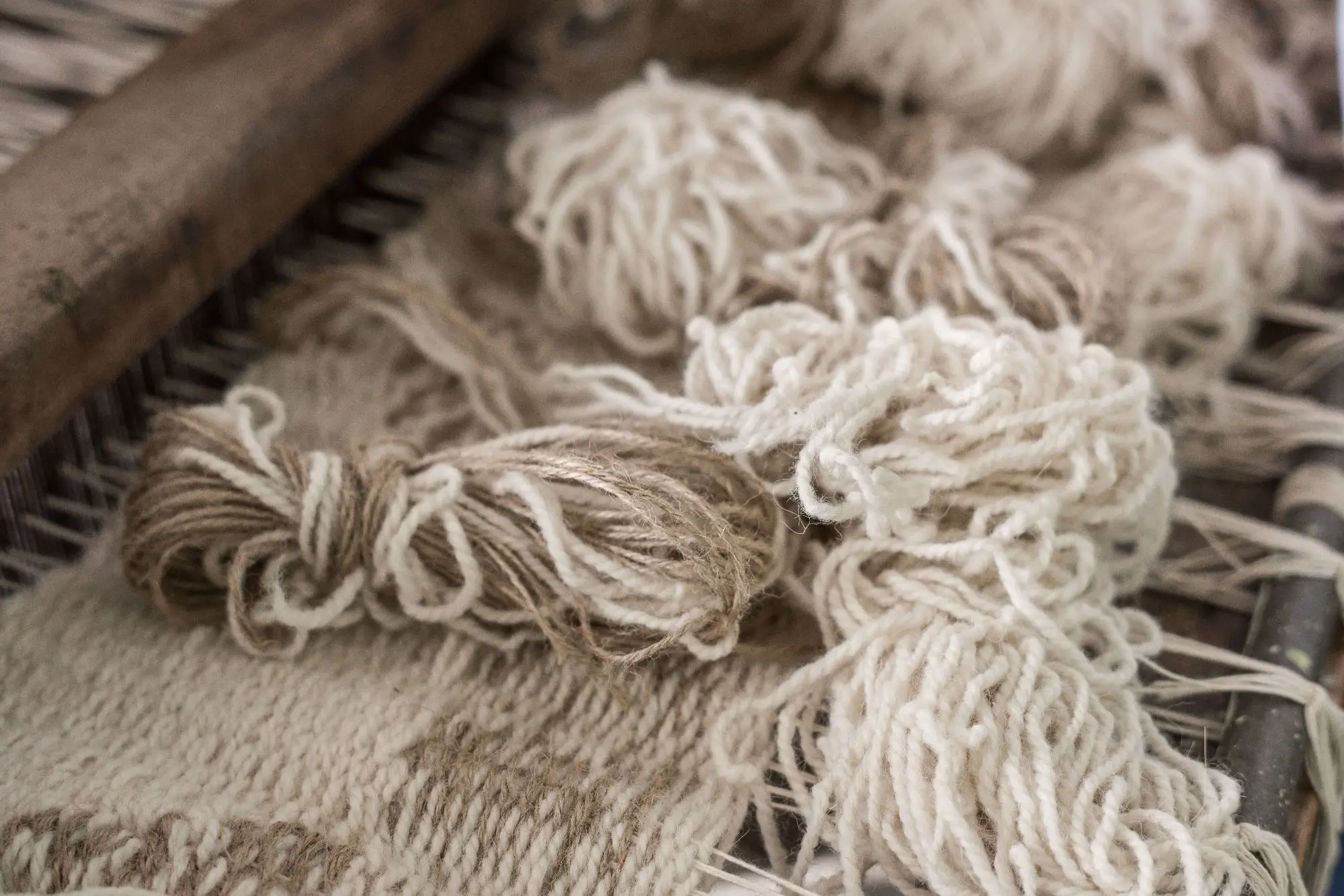
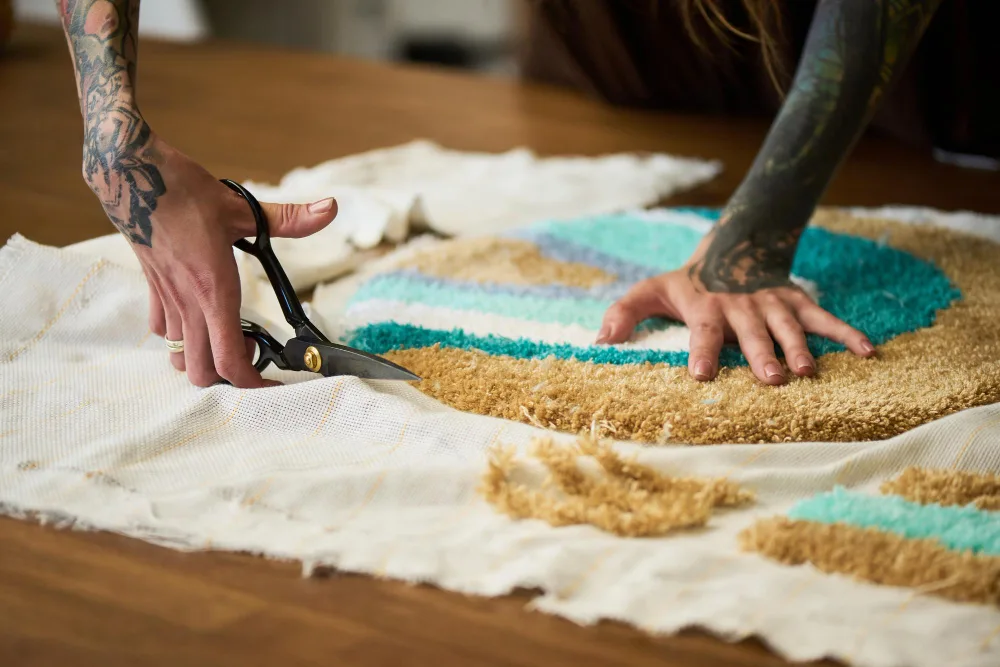
Handmade rugs are crafted by artisans tying individual knots, while machine-made rugs are manufactured by power looms in minutes. The difference isn't just in the production time; it's in the durability, feel, and long-term value of the piece.
A hand-knotted rug can last for 50 to 80 years or more, often becoming a family heirloom. In contrast, machine-made rugs typically use synthetic glues to hold the fibers in place. Over time—usually within 5 to 10 years—this glue breaks down, causing the rug to delaminate and shed.
In our experience at Organic Looms, we see clients who have replaced three or four machine-made rugs in the same timespan that a single hand-knotted piece would have lasted. While the upfront cost of a handmade rug is higher (often starting around $40-$60 per square foot depending on the knot count), the cost per year of ownership is frequently lower because you'ren't constantly replacing it.
How Do I Choose the Right Rug for an Arizona Home?
Choose natural fibers like wool or silk that breathe and release heat, rather than synthetics that trap it. In Phoenix, where temperatures hover above 100°F for months, the materials inside your home matter just as much as your insulation.
Wool is the gold standard for our desert climate. It's incredibly durable and naturally resistant to dust mites—a huge plus during our dusty haboob season. It also has a unique ability to manage moisture. Even though we live in a dry climate, we use swamp coolers and A/C units that can fluctuate humidity levels. Wool adapts to these changes without warping.
For those luxury touches, silk or bamboo silk blends add a stunning sheen that mimics the shimmering desert light. However, we typically recommend these for lower-traffic areas, like a master bedroom or a formal sitting room, rather than the main entryway where red desert dust is likely to be tracked in.
Where Can I Find a Quality Rug Store in Arizona?
You can find high-quality rugs by looking for specialized retailers that focus on natural materials and custom designs rather than big-box inventory. A dedicated rug store in Arizona will have staff who understand knot counts, dyes, and origin stories.
When we work with homeowners in Scottsdale or near Camelback Mountain, we often find that "standard" sizes don't fit custom builds. A 9x12 might be too small for a great room with soaring ceilings, while a 10x14 might overwhelm a cozy den.
Local experts can help you navigate these dimensions. We recently helped a client in Silverleaf who needed a custom runner for a curved staircase. A mass-produced rug simply wouldn't work. We were able to design a piece that flowed perfectly with the architecture, something you just can't click and ship from a generic online retailer.
Can Designer Rugs Fit Modern Interior Design?
Yes, designer rugs are incredibly versatile and can soften the clean lines of modern architecture common in Phoenix. Many people associate "handmade rugs" with traditional, intricate Persian patterns, but the artistry has evolved significantly.
Modern handmade rugs often feature abstract designs, tonal color palettes, and varying pile heights that create texture without visual clutter. For a sleek, contemporary home in Biltmore, a rug with a subtle, organic pattern in cool grays and blues can ground the furniture without competing with the art on the walls.
We're seeing a trend away from heavy, dark reds and navies toward "erased" patterns and soft neutrals—sand, sage, and terracotta—that reflect our Sonoran landscape. These pieces bridge the gap between old-world craftsmanship and modern minimalism.
How Do I Maintain a Handmade Rug in a Dusty Climate?
Vacuum your handmade rug weekly using suction only, and rotate it every six months to ensure even wear. The biggest enemy of rugs in Phoenix isn't moisture—it's grit.
Our desert dust is abrasive. If allowed to settle deep into the pile, it acts like tiny razor blades, sawing away at the fibers every time you walk on the rug. Regular vacuuming (without the beater bar engaged, which can tear the knots) is essential.
Professional cleaning is recommended every 3 to 5 years. Don't trust a high-quality wool or silk rug to a standard carpet cleaning service that uses steam extraction. The heat and chemicals can strip the natural lanolin from the wool and cause colors to bleed. Instead, look for specialists who use immersion washing techniques, which gently flush the dust out of the foundation.
The Bottom Line on Investing in Craftsmanship
Investing in a handmade rug is about valuing quality over disposability. It's a choice to bring something into your home that was made with intention, skill, and cultural heritage.
We know that furnishing a home is a significant expense. But when you consider that a hand-knotted rug can anchor your family's memories for decades, the value becomes clear. It's not just a floor covering; it's art you can live on.
If you're ready to explore the difference a handmade piece can make in your home, we're here to help. Contact Organic Looms at (480) 947-4822 to schedule a consultation or visit our showroom.