A handmade wool rug costs significantly more than a machine-made one, and the gap is not arbitrary. It reflects materials, labor, and a construction method that produces something built to last decades rather than years. If you are a Scottsdale homeowner or designer weighing those options right now, reach out to Organic Looms at (480) 947-4822 to talk through what makes sense for your space.
Most machine-made rugs sold in the Old Town Scottsdale design district are produced in hours by automated looms using synthetic fibers or low-grade wool blends. They can look appealing on the showroom floor. Within a few years of regular use, though, the pile flattens, the colors fade, and the backing deteriorates. They are floor coverings in the most literal sense: functional, temporary, replaceable. The price reflects that lifespan, not just the materials.
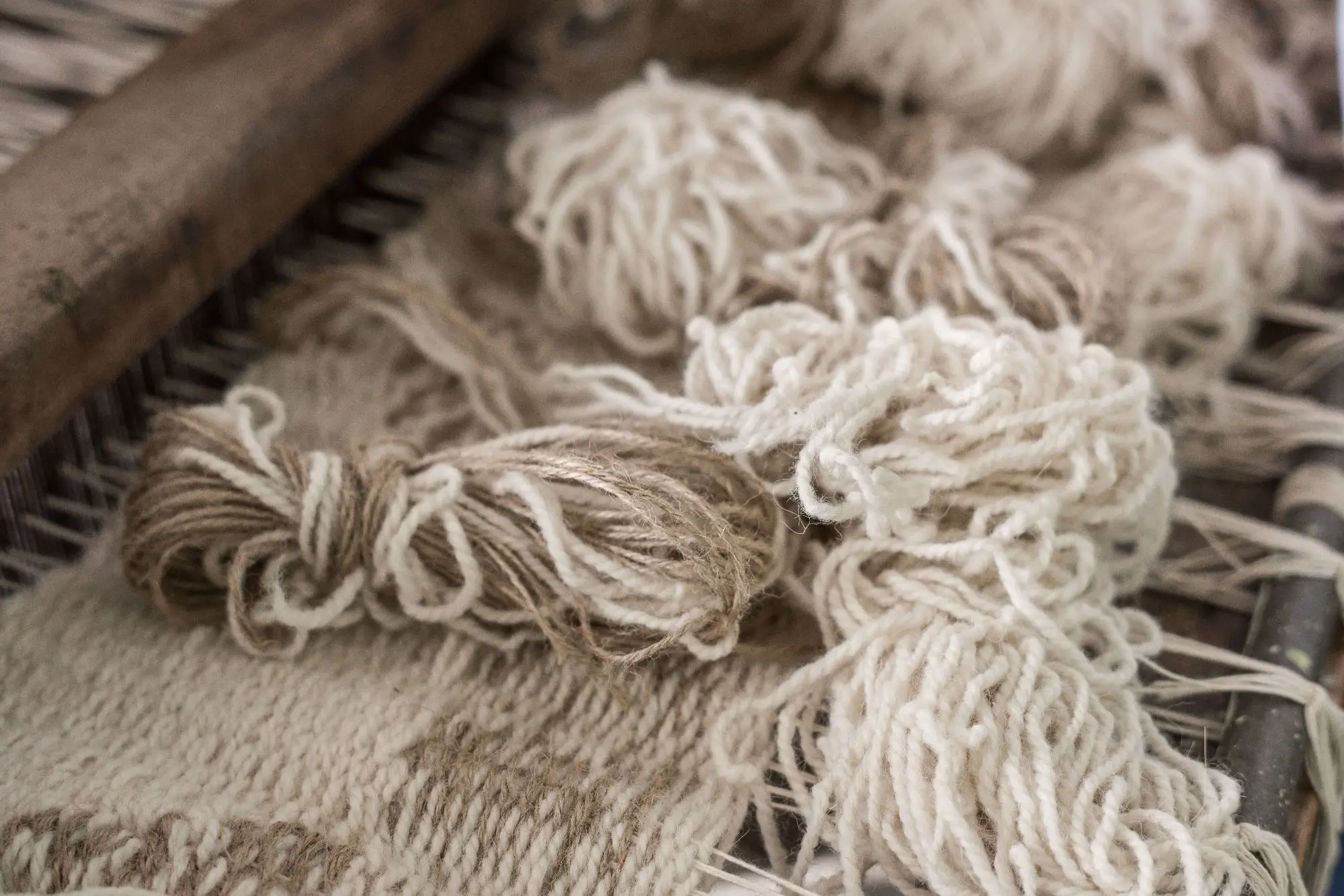
A hand-knotted wool rug is a different object. Weavers working on a single large piece can spend months at the loom, tying individual knots by hand across a foundation of warps and wefts. The density of those knots determines the rug's durability and the resolution of its pattern. For homeowners in Paradise Valley accustomed to investing in materials that hold their value, the analogy to hand-laid stonework or solid hardwood is not a stretch. Organic Looms specializes in exactly this category: natural, organic, hand-knotted rugs suited to Arizona luxury homes.
What months of weaving actually produces
Consider a medium-sized hand-knotted rug in a traditional geometric pattern. A skilled artisan begins by stretching the warp threads on a vertical loom, then works row by row, hand-tying each knot and trimming the pile to an even height before moving to the next. The process requires both technical precision and an intimate knowledge of the design. Errors are not caught by a sensor and flagged for correction. They are caught by a human eye and fixed by hand. When the piece is finished, it is washed, stretched, and dried in a way that sets the fibers and brings out the lanolin naturally present in quality wool. That lanolin is part of why the rug improves with age rather than declining. It keeps the fiber resilient, gives the pile a soft sheen, and makes the rug naturally resistant to soil.
Why 2026 interiors call for this kind of material
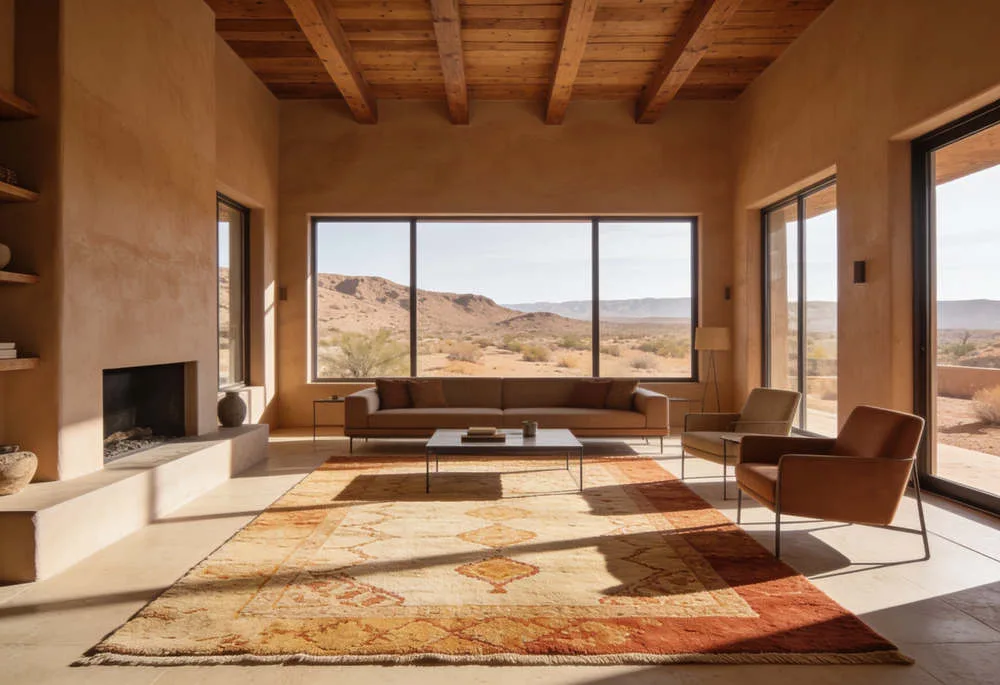
The design direction that dominated the last decade, cool grays, polished concrete, sparse rooms that photographed well but felt cold to live in, has largely run its course. What is replacing it in high-end Scottsdale and Arizona homes is warmer, more tactile, and more personal. Oat, sand, clay, and greige are the neutrals showing up in new builds and renovations. Natural materials, wool, jute, linen, unlacquered brass, are valued precisely because they age in ways that look intentional rather than worn out. A hand-knotted wool rug fits this shift exactly. It gets better with foot traffic. The colors deepen slightly over years of use. Pets, kids, gatherings: this is what the rug was built for.
Machine-made rugs, even good ones, do not behave this way. Their aging is decline, not patina.
The practical case for spending more once
A family that replaces a machine-made rug every five to seven years will spend more over two decades than one that buys a quality hand-knotted piece and keeps it. That is before accounting for the resale value that some handmade rugs carry, or the fact that a well-chosen piece can move with you through multiple homes and rooms over a lifetime. Interior designers working with clients on longer-term projects understand this math. The handmade rug is not the luxury line item. The cycle of replacements is.
The question is not really whether the handmade rug is worth the price. It is whether you are buying a floor covering or a piece your home will be built around for the next generation.
If you are ready to find that piece, visit the rug store in Scottsdale or explore area rugs in Paradise Valley at Organic Looms. You can also call the team directly at (480) 947-4822 to talk through your space before you visit.