Does your living room feel a bit disjointed, like the furniture is floating in an empty sea of tile or hardwood? You aren't alone. In our years serving Phoenix homeowners, we've found that rug placement is the single most common design struggle.
A well-placed rug anchors the room, defines the space, and adds much-needed warmth to our Arizona homes. But getting the size and positioning right is tricky, especially with the unique open floor plans common in neighborhoods like Arcadia or Paradise Valley.
If you're ready to stop guessing and start styling, here is how to place a rug like a pro.
Understanding Rug Sizes and Room Dimensions
Before you buy anything, grab a tape measure. You need to know the exact dimensions of your seating area, not just the room itself.
What size rug do I need for my living room?
For most standard living rooms, an 8x10 or 9x12 rug is the best choice. A 5x8 rug is typically too small for anything other than a very compact apartment or a cozy reading nook. In Phoenix homes with spacious, tiled great rooms, sizing up is usually the smarter move to prevent the rug from looking like a postage stamp.
Here’s a quick breakdown:
- 5x8: Best for small areas or under a coffee table in a compact setup.
- 8x10: The standard for most average-sized living rooms.
- 9x12 or larger: Essential for large, open-concept spaces to unify the furniture.
Key Rug Placement Styles
There are three main ways to position your furniture on a rug. The right choice depends entirely on the size of your room and your furniture layout.
All Furniture on the Rug
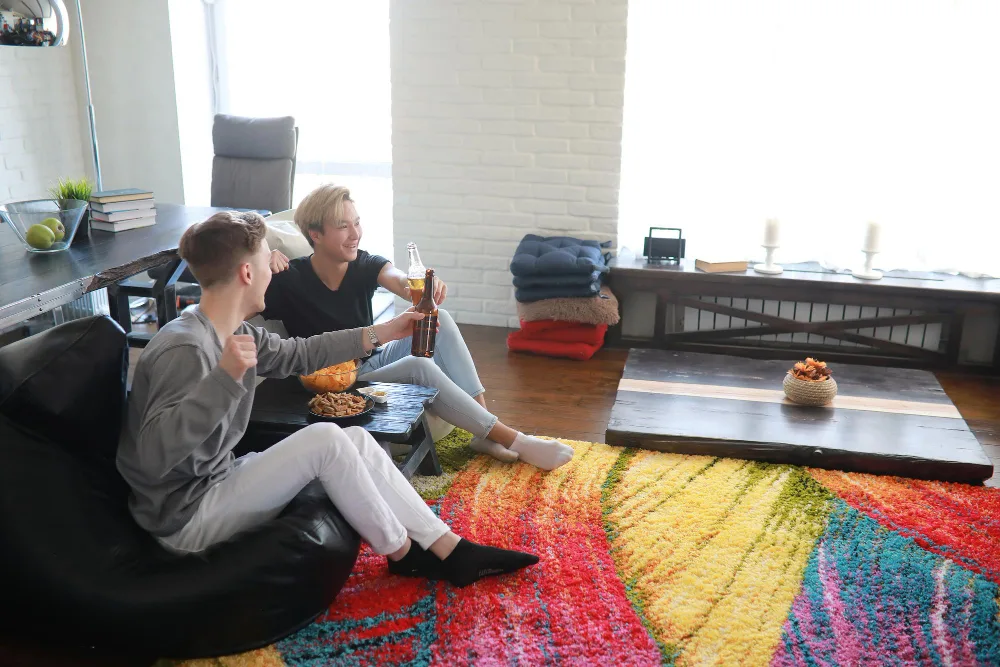
This is the most luxurious option and works best in large, open rooms. By placing all legs of your sofa and chairs on the rug, you create a distinct "island" that defines the living area. This is perfect for expansive great rooms where you need to separate the living space from the dining area or kitchen visually.
Front Legs on the Rug
This is the most versatile and common layout. You place just the front legs of the sofa and accent chairs on the rug, leaving the back legs on the hard floor. This ties the furniture together without requiring a massive, custom-sized rug. It balances the space beautifully and works well in most Phoenix ranch-style homes.
The Floating Rug
In smaller spaces, you might place a smaller rug in the center of the seating arrangement, under the coffee table, with no furniture legs touching it. While this can work in tight quarters, be careful—it often makes a room look smaller than it's.
Considering Function and Traffic Flow
How does traffic flow affect rug placement?
Your rug should handle foot traffic without becoming a tripping hazard. In high-traffic zones, leave at least 12 to 18 inches of bare floor between the edge of the rug and the wall or walkways.
Arizona living brings its own challenges—namely, dust and tracking in debris from the yard. If your living room connects to the patio, ensure the rug doesn't obstruct the door swing. You also want to avoid placing the edge of a rug right in a main walkway where people might trip.
Choosing the Right Material for Arizona Homes
Our desert climate means we deal with intense sunlight and dust. The material you choose matters just as much as where you put it.
What is the best rug material for Phoenix homes?
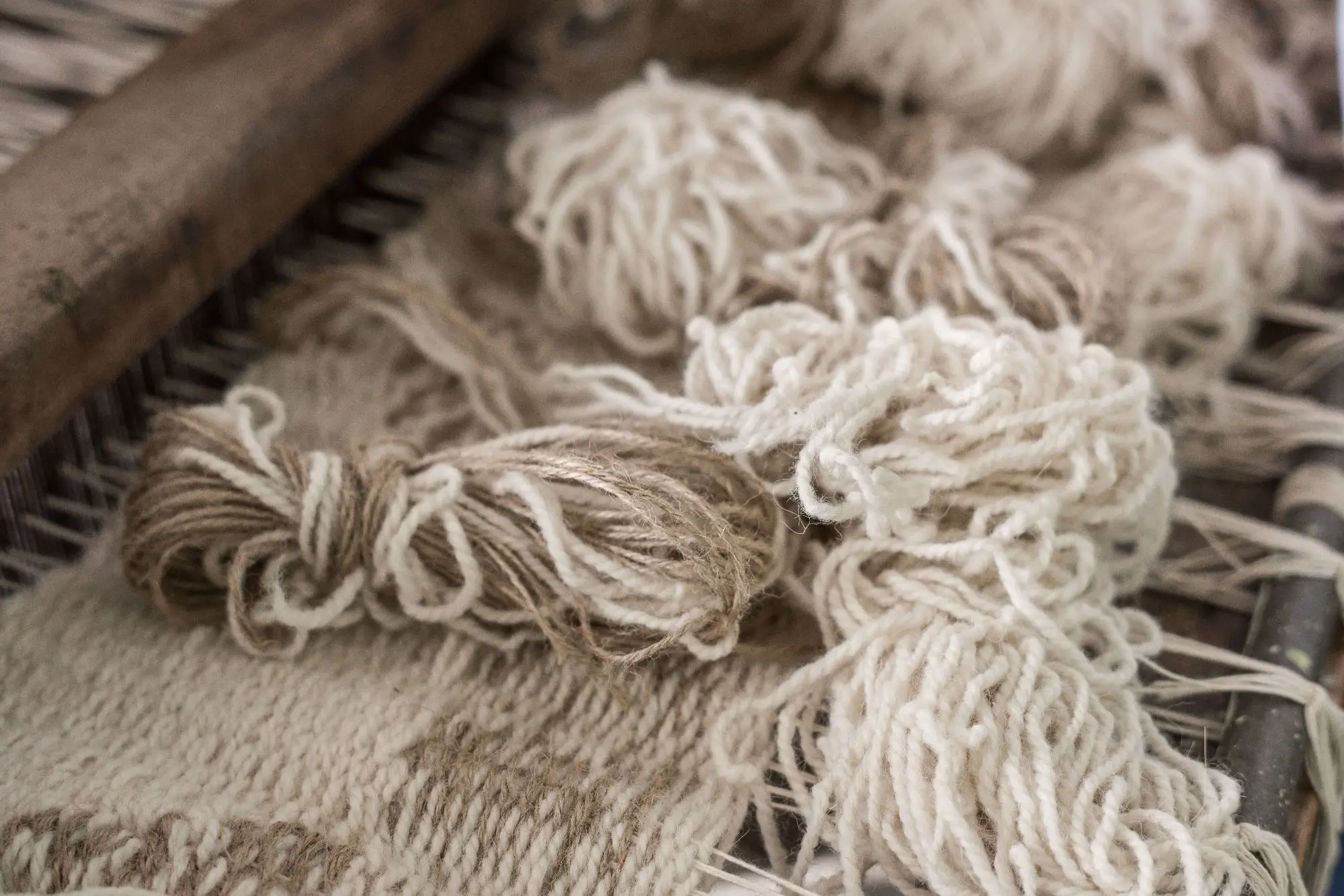
Natural fibers like wool are excellent for durability and stain resistance, while jute and sisal offer a casual, organic look that handles our dry climate well. Synthetic blends are also a practical option for high-traffic areas because they are easy to clean.
If you have large windows letting in that blazing Arizona sun, rotate your rug every six months to ensure it fades evenly. For specific advice on durable materials, check out our guide to area rugs in Phoenix.
Incorporating Local Decor Styles
Phoenix interiors often lean towards Desert Modern, Southwestern, or Mediterranean styles. Your rug is a foundational piece for these looks.
- Desert Modern: Look for neutral tones, subtle textures, and minimal patterns. A textured wool rug in cream or grey fits perfectly here.
- Southwestern: Don't be afraid of bold geometric patterns and warm earth tones like terracotta, rust, and sage.
- Mediterranean: In historic districts like Willo, traditional patterns or rich colors can complement arched doorways and Saltillo tile floors.
Avoiding Common Mistakes
We see the same few errors pop up constantly. Here is how to avoid them.
What is the biggest rug mistake people make?
The "floating island" look caused by a rug that is too small. If your rug barely fits under the coffee table, it shrinks the visual size of the room. Always err on the side of going bigger.
Another common issue is ignoring the rug pad. On our slick tile or wood floors, a rug pad is non-negotiable. It prevents slipping, adds comfort, and extends the life of the rug by preventing fibers from being crushed against the hard floor.
Ready to Transform Your Living Room?
Placing a rug correctly changes the entire feel of your home. It creates boundaries, adds comfort, and finishes the design.
If you're struggling to find the perfect piece or need help with sizing, we are here to help. Visit our rug store in Arizona to explore our collection. We can guide you toward the right size, material, and style for your specific space.
Need expert advice?
Call Organic Looms at (480) 947-4822 today. We’ll help you find the perfect foundation for your room.