Tile and stone floors are standard in the Valley. They keep our homes cool during those long triple-digit summers, but they don't exactly scream "cozy." Without the right foundation, a room can feel cold and echoey. A high-quality area rug solves this problem instantly, adding warmth, sound dampening, and a layer of protection for your floors.
But buying a rug isn't just about picking a pretty pattern. You need to consider the intense sunlight we get here, the desert dust that finds its way inside, and how the rug feels underfoot. Here is what you need to know before you shop for your next rug.
Which Materials Last Longest in Desert Climates?
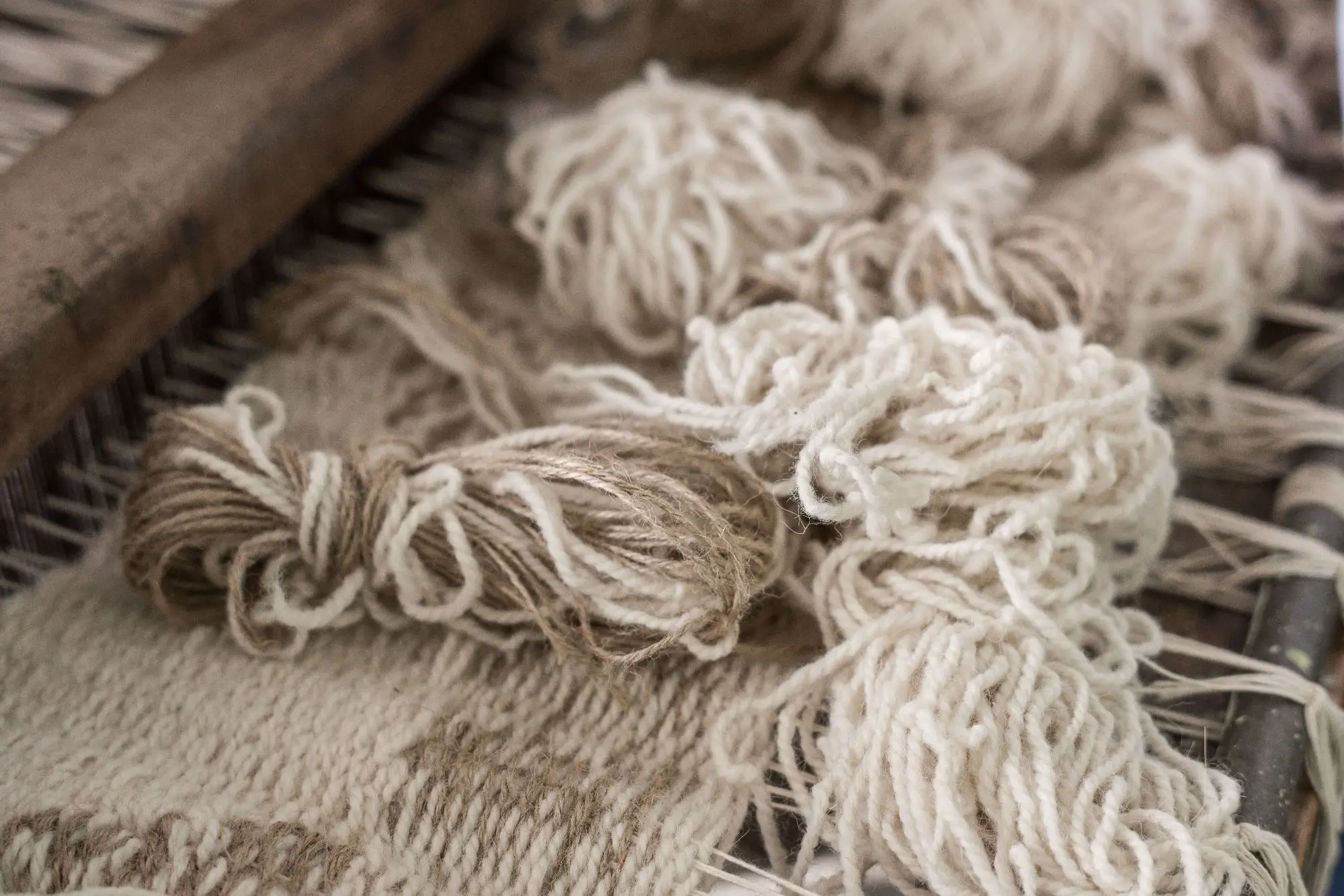
Wool is the absolute best material for Arizona homes because itnaturally durable, soil-resistant, and breathable. Unlike synthetic fibers (like polypropylene or polyester) that trap heat and can degrade in sunlight within 3 to 5 years, a hand-knotted wool rug can last 50 years or more. Wool fibers contain natural lanolin, which repels the fine dust we get in neighborhoods like Arcadia or Silverleaf, making it much easier to clean.
If you're looking for high-quality area rugs in Paradise Valley, you want to avoid viscose or "bamboo silk." While these materials look silky and soft in the showroom, they stain immediately if you spill water on them. In a dry climate, natural fibers like wool, silk, and linen perform the best because they regulate moisture and maintain their shape over decades of use.
How Do I Choose the Right Rug Size?
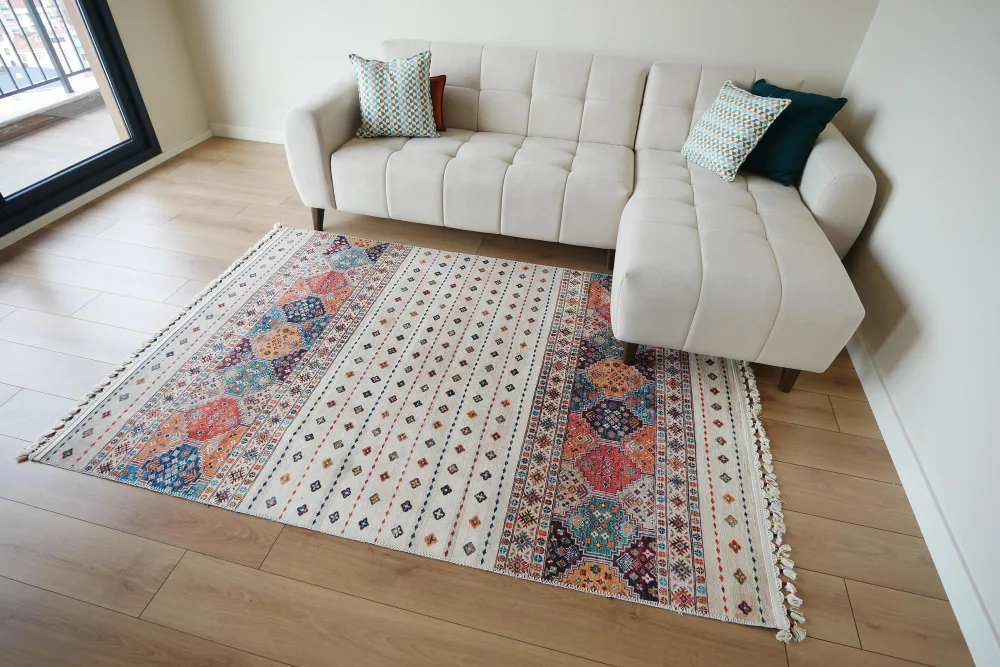
For a living room, choose a rug large enough that at least the front legs of your sofa and chairs sit on it. A common mistake is buying a rug that "floats" in the middle of the room, which makes the space look smaller and cheaper. You typically want 18 to 24 inches of bare floor exposed around the edges of the room to frame the space.
Standard Sizing Guidelines
- Living Room: An 8x10 or 9x12 rug is standard for most average-sized living rooms. If you have a large open-concept space, you might need a 10x14 to anchor the furniture.
- Dining Room: The rug must extend 24 inches past the table on all sides. This prevents chairs from catching on the edge of the rug when guests slide them back.
- Bedroom: An 8x10 rug works well under a Queen bed, while a 9x12 is best for a King. Place the rug perpendicular to the bed frame, stopping a few inches before the nightstands.
When you visit an area rug Store Arizona residents trust, bring your room measurements and photos. It saves a lot of time and prevents the hassle of returning a heavy rug that doesn't fit.
What Styles Work Best for Arizona Interiors?
We are seeing a shift toward "desert modern" aesthetics that favor earthy tones, organic textures, and subtle geometric patterns. The heavy, dark traditional rugs of the past are being replaced by lighter palettes that reflect our surroundings—think the sage greens of the Sonoran Desert, the terracotta of the Superstition Mountains, or the soft creams of limestone.
When browsing a rug store in Arizona, look for texture over busy patterns. High-low piles or hand-spun wool create depth that looks sophisticated without overwhelming the room. In bright, sun-drenched rooms, these textured neutrals hide footprints and dust much better than solid dark colors, which show every speck of lint.
How Much Does a Quality Area Rug Cost?
Expect to pay between $40 and $80 per square foot for a high-quality, hand-knotted wool rug. While you can find machine-made rugs for $10 to $20 per square foot, they lack longevity. A hand-knotted rug is an investment asset that holds value, whereas a machine-made rug is a disposable decor item that will likely end up in a landfill in a few years.
Here is a quick breakdown of what goes into the cost:
- Knot Count: Higher knots per square inch (KPSI) means a denser, clearer pattern and higher durability.
- Materials: 100% New Zealand wool or real silk increases the price but ensures the rug feels soft and wears like iron.
- Labor: A 9x12 hand-knotted rug takes 3 to 4 weavers about six months to create. You are paying for thousands of hours of skilled artistry.
Finding the right area rug Store Arizona offers means finding transparency in pricing. You should know exactly where the rug was made and what fibers were used.
How Do I Maintain a Rug with Arizona Dust?
Vacuum your rug once a week using suction only, or turn off the beater bar if possible. The rotating bristles of a beater bar can pull fibers out of hand-knotted rugs and cause fuzzing. The main enemy here in the Valley is fine dust and grit. If that grit settles deep into the foundation of the rug, it acts like sandpaper and cuts the fibers when you walk on it.
Professional Cleaning Schedule
Have your rug professionally washed every 3 to 5 years. Do not use standard carpet cleaners who steam clean wall-to-wall carpet. High heat and harsh chemicals can strip the natural oils from wool and cause colors to bleed. A specialized area rug Store Arizona locals recommend will often have a dedicated wash facility where they submerge the rug to flush out the dirt completely.
Finding the Perfect Foundation
Your rug is the foundation of your room's design. It sets the tone for comfort and style. Whether you're furnishing a new build in North Scottsdale or refreshing a historic home, choosing natural materials and the correct size will ensure your home looks finished and feels welcoming.
If you need help selecting the right piece or understanding the difference between weaves, we are here to help. Contact Organic Looms at (480) 947-4822 to speak with a design expert today.