You bought the sofa, the coffee table, and the perfect accent chairs, but the room still feels... echoey. In Paradise Valley, where sprawling open floor plans and travertine or hardwood floors are the norm, a living room without a rug can feel unanchored and cold. The right area rug doesn't just protect your floors; it defines the conversation space and adds a layer of comfort that turns a house into a home.
Selecting the right rug involves more than just picking a pretty pattern. You have to get the size and placement exactly right to balance the scale of your furniture. If you get it wrong, your room might look cluttered or disjointed. Here is how to measure, place, and style your rug like a pro.
How to Choose the Right Rug Size
Choosing the correct rug size starts with measuring your seating area, not just the perimeter of the room. In open-concept homes like we see near Camelback Mountain, you generally want a rug that is large enough to slide under the front legs of every piece of furniture in the grouping. For most average-sized living rooms, an 8x10 or 9x12 rug works best, while larger estate homes often require 10x14 or custom sizing.
Measuring Tips for Open Floor Plans
Don't guess. Use painter's tape to outline the rug dimensions on your floor before you buy. This lets you see exactly how the rug will interact with your walkways and furniture. Leave at least 18 to 24 inches of bare floor exposed around the perimeter of the room to frame the space. If you're shopping for area rugs in Paradise Valley, having these exact measurements on hand will help you narrow down your options quickly.
3 Rules for Living Room Rug Placement
Where exactly should those furniture legs go? There are three main layouts designers use to ground a living room.
1. All Legs on the Rug
This layout creates the most luxurious, cohesive look and is ideal for large rooms. You place the sofa, chairs, and side tables completely on top of the rug. This setup defines the seating area clearly, which is helpful in large great rooms where the living space flows directly into the kitchen or dining area. You'll need a significantly larger rug for this look—usually a 10x14 or larger—so budget accordingly. High-quality large area rugs typically range from $2,500 to $8,000 depending on the material and weave.
2. Front Legs Only
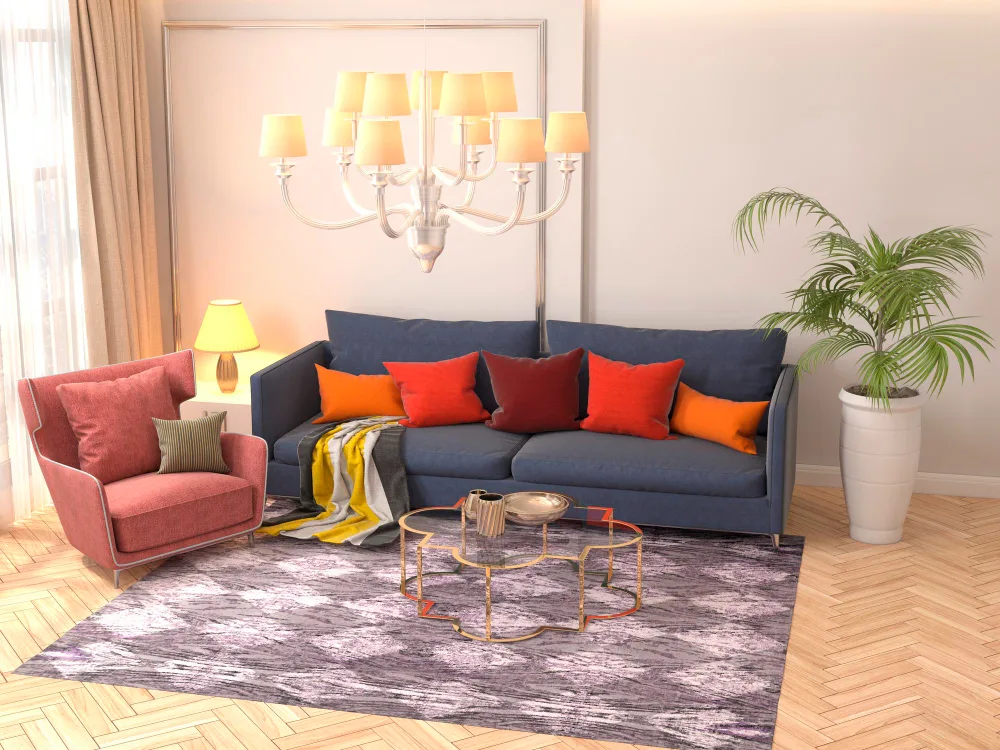
This is the most common and versatile placement, especially for 8x10 or 9x12 rugs. You place the front feet of the sofa and chairs on the rug, while the back legs rest on the bare floor. It connects the furniture pieces visually without requiring a massive, custom-sized carpet. It’s a great way to anchor a floating furniture arrangement in the middle of a room.
3. The Floating Layout (Coffee Table Only)
For smaller setups or when you want to highlight a specific antique piece, you might place a smaller rug (like a 5x8) strictly under the coffee table. However, be careful with this look. If the gap between the sofa and the rug is too wide, it can make the room look disjointed. This style is less common in modern Paradise Valley homes but can work in cozy dens or reading nooks.
Common Placement Mistakes to Avoid
Even with the best intentions, homeowners often make small errors that throw off the room's balance.
Choosing a Rug That Is Too Small
The "postage stamp" effect happens when you choose a rug that floats in the center of the room without touching any furniture. It makes the room look smaller and cheaper. A rug store in Paradise Valley, Arizona will always advise you to size up rather than down. If you love a small vintage rug but it’s too tiny for the space, try layering it over a larger, neutral jute or sisal rug to get the coverage you need.
Ignoring Traffic Patterns
In high-traffic areas, like the walkway between your living room and patio, you need to ensure the rug is durable and secure. A rug that curls at the corners or slips underfoot is a tripping hazard. Always use a high-quality rug pad. It extends the life of your rug by preventing fiber crushing and keeps it safely in place.
Clashing with Existing Decor
Your rug doesn't need to match your sofa perfectly, but it should speak the same language. If your furniture has busy patterns, opt for a solid or subtle tone-on-tone rug. If your sofa is a solid neutral, a rug is the perfect place to introduce a bold pattern or color.
Desert-Specific Considerations for Your Rug
Living in the desert presents unique challenges for home textiles, specifically dust and intense sunlight.
Fighting the Sun Fade
Our Arizona sun is intense. UV rays can fade natural dyes by 40% in just a few years if untreated windows are involved. If your living room has large, south-facing windows like many homes off Mockingbird Lane, look for rugs with UV-resistant properties or rotate your rug 180 degrees every six months. This ensures any fading happens evenly rather than in one distinct patch.
Handling Dust and Hard Floors
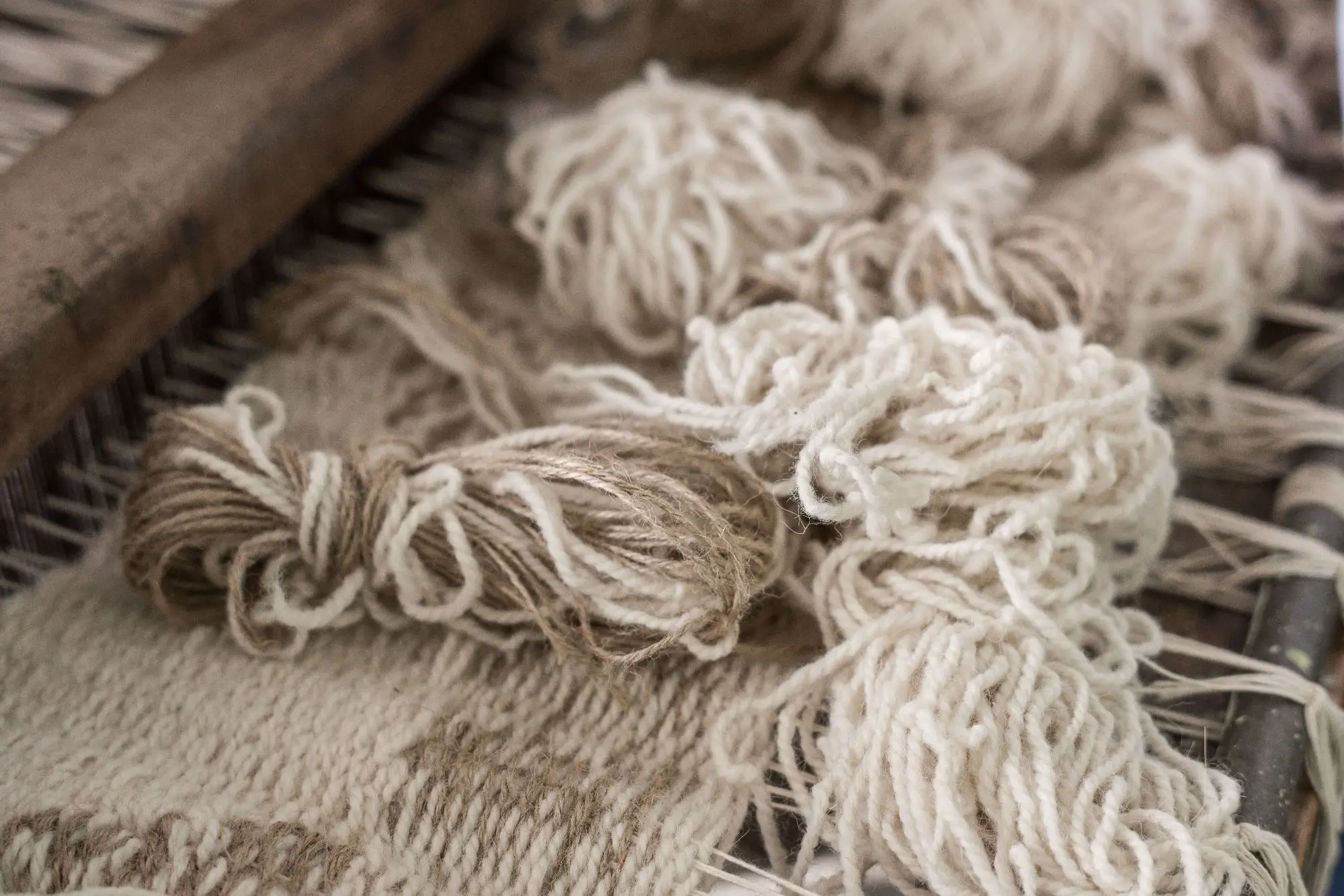
Desert dust is a reality here. High-pile shag rugs might feel soft, but they trap dust and allergens effectively—sometimes too. Low-pile wool or hand-knotted rugs are easier to vacuum and keep clean. Since many local homes feature stone or tile flooring to keep cool, a thick wool rug also provides necessary acoustic dampening, stopping echoes from bouncing around hard surfaces.
When you visit a rug store in Arizona, ask about "lanolin-rich" wool. This natural wax makes the fiber more resistant to staining and dust, which is perfect for our environment.
What Does a Quality Area Rug Cost?
Investing in a rug is like investing in a piece of art that you walk on. While prices vary wildly based on size and material, a hand-knotted wool rug (8x10) typically starts around $3,000 and can go up to $15,000+ for fine silk blends or antiques.
Machine-made synthetic rugs are cheaper, often $300-$800, but they rarely last longer than 3-5 years before showing significant wear. In contrast, a hand-knotted wool rug can last 50+ years with proper care.
If you're looking for a rug store in Paradise Valley, Arizona, remember that you're paying for longevity. A quality rug is an heirloom, not a disposable accessory.
Bringing It All Together
Your living room rug is the foundation of your design. It sets the tone, defines the space, and protects your floors from the daily grind of life. By following these placement rules and choosing the right materials for our desert climate, you ensure your investment looks beautiful for decades.
Whether you're in Mummy Mountain Estates or a modern condo near Scottsdale Road, the principles remain the same: measure twice, anchor your furniture, and choose quality materials.
Ready to Find Your Perfect Rug?
If you're unsure about sizing or need help selecting a pattern that complements your home, our team is here to help. We understand the specific needs of Paradise Valley homes and offer a curated selection of hand-knotted masterpieces.
Contact Organic Looms today at (480) 947-4822 to schedule a consultation.